

Restaurant
Explore our complete collection of museum-quality canvas art. Each piece is printed on premium 340gsm cotton canvas with archival inks.
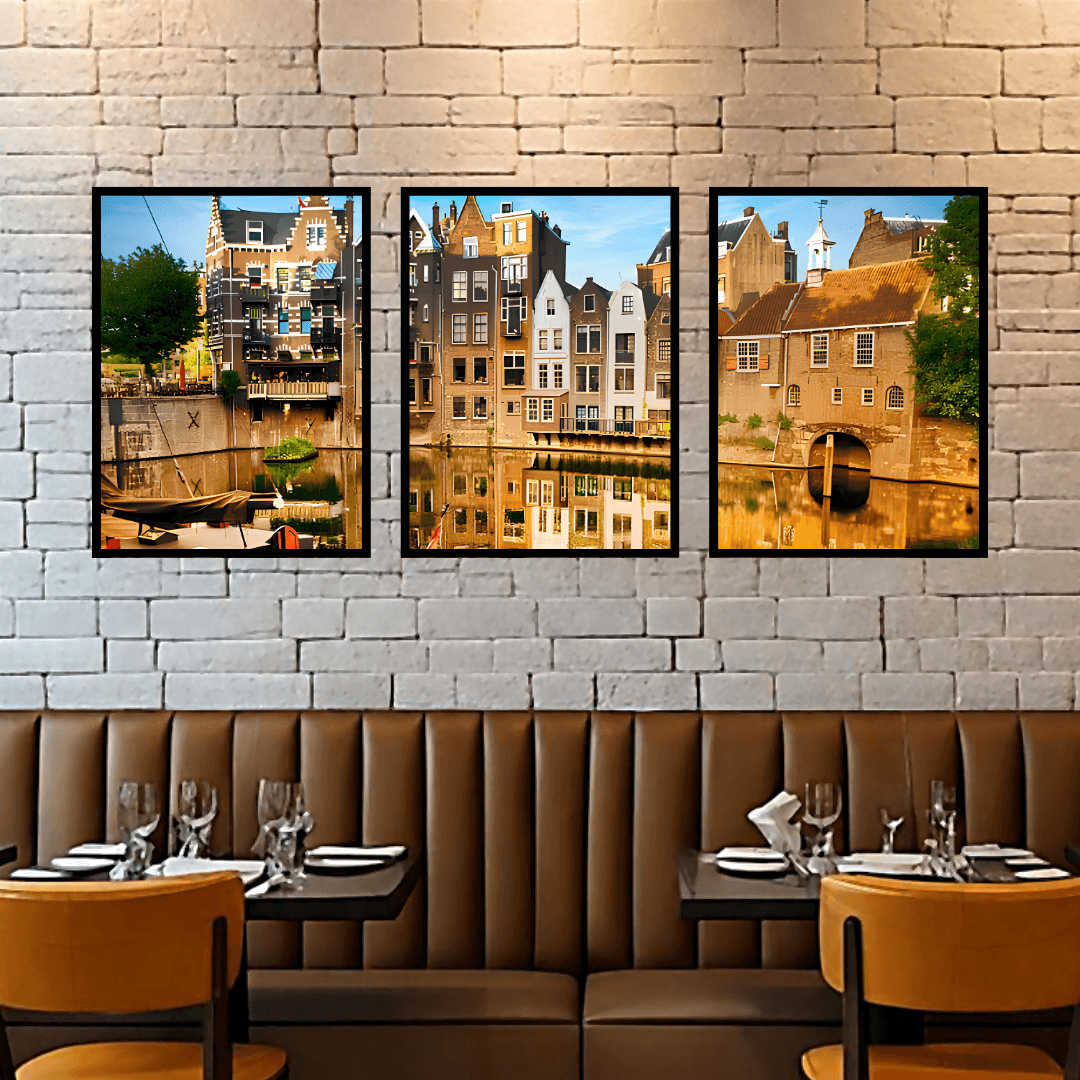 Best Seller
Historic Delfshaven (3-piece set)

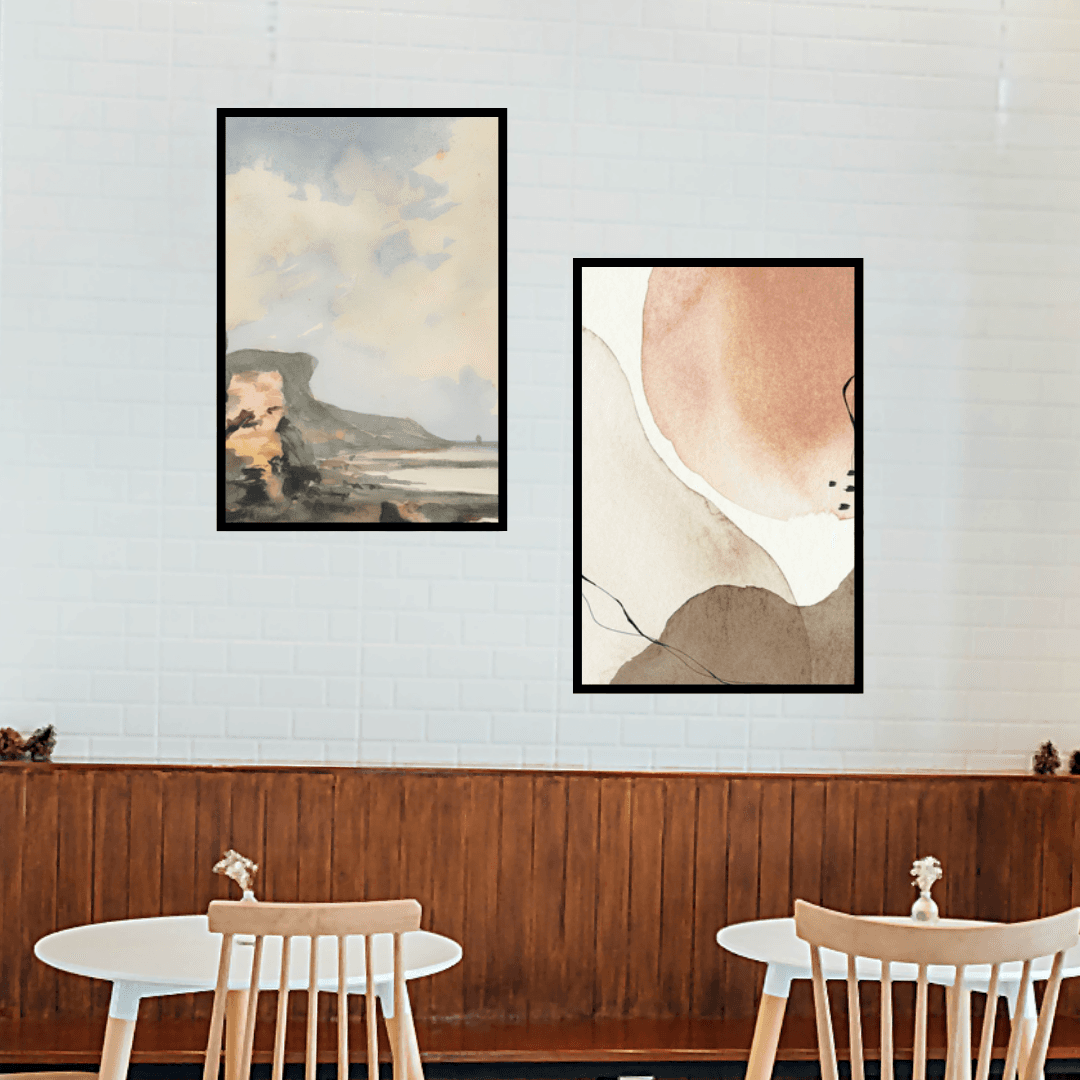 Best Seller
Whispers of Nature
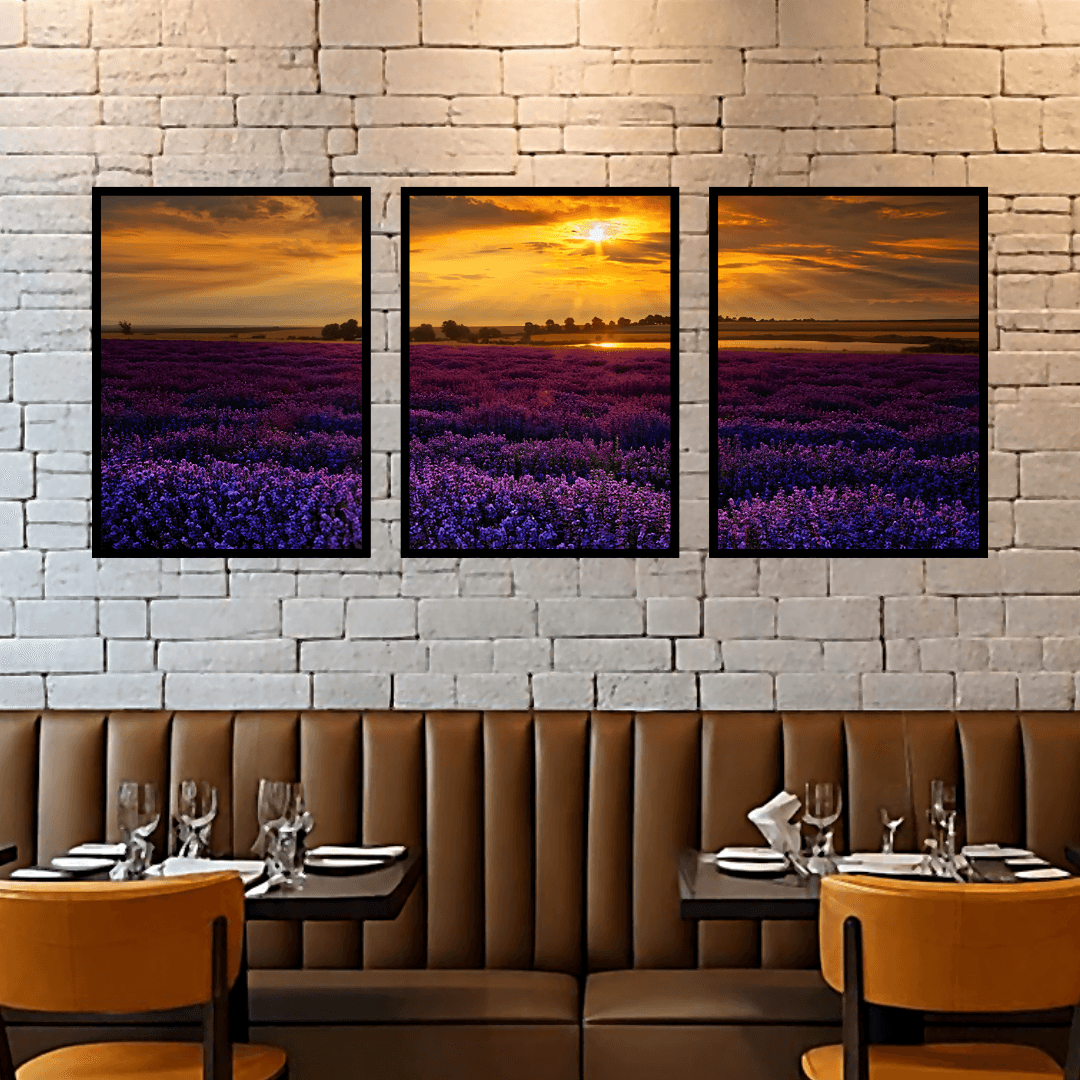 New
Morning Lavender Blossom (3-piece set)
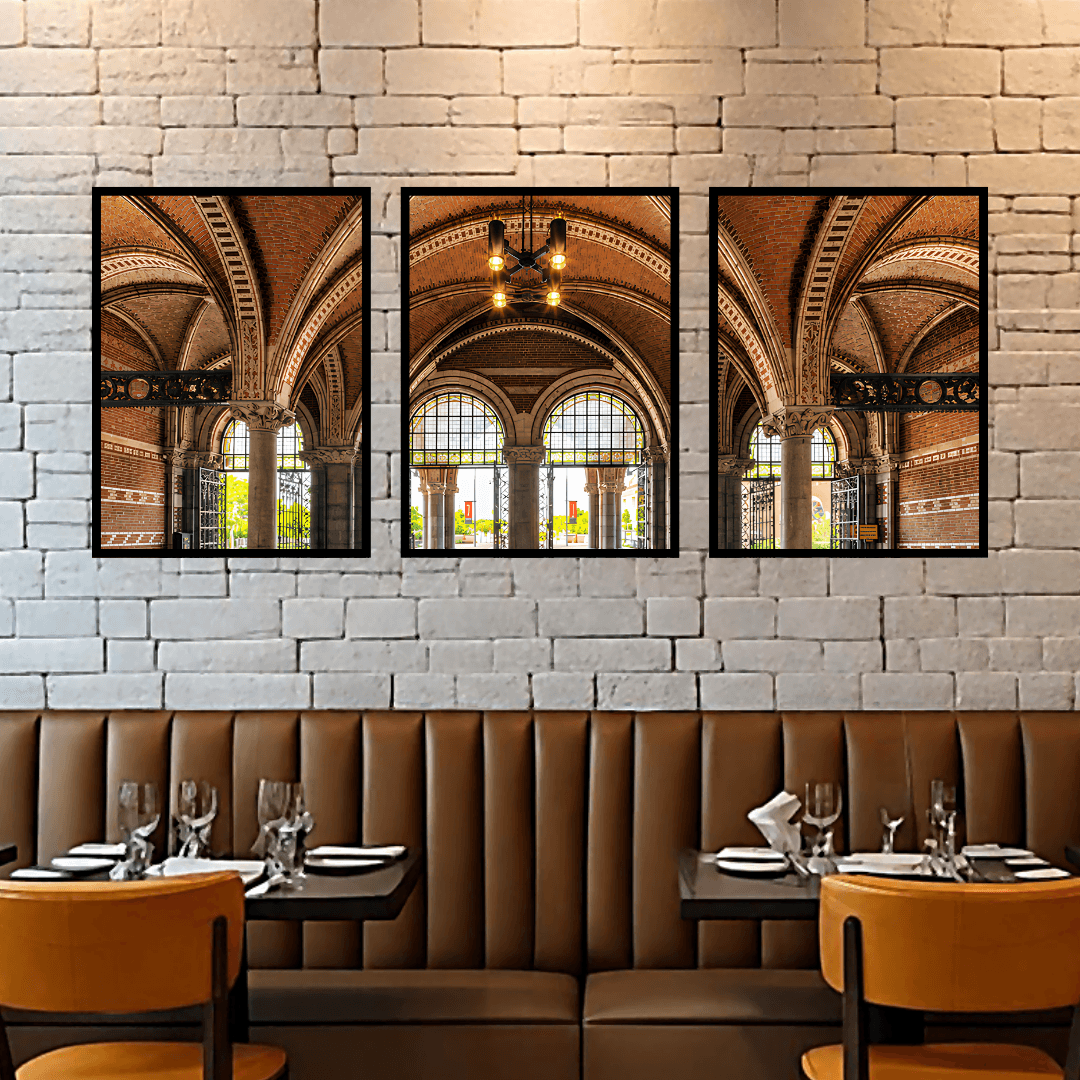 New
Rijksmuseum Passage (3-piece set)
Diners spend an hour or more at a restaurant table, and for much of that time they are looking at whatever wall is in front of them. The art there becomes part of the meal, quietly shaping whether the room feels relaxed, special, or simply unfinished. This collection brings together decor designs suited to restaurants, from wide European street scenes to fresh floral sets for long dining walls. Use the filters to narrow down by orientation, style, and color.
Art in a Restaurant Is Seen From the Table
A cafe customer might glance at the walls on the way to the counter. A restaurant guest sits down, orders, waits, eats, and talks, often for well over an hour, and the wall they face is in view the entire time. That changes how you should choose and place art. A piece that looks striking for five seconds can become tiring by dessert, while a design with depth and a calm rhythm keeps rewarding a second and third look.
It also means the height that matters is seated eye level, which is noticeably lower than standing eye level. Art hung where it looks right to you as you walk through the empty dining room may feel too high once guests are seated, especially above booths and banquettes. The simplest check is to sit at a few tables before you hang anything and see where your eyes naturally fall.
Mapping What Every Table Looks At
In most dining rooms, some walls are seen by almost every guest and some by nobody at all. Spending the budget on the walls people actually face is the single most useful decision you can make, and it only takes a quiet half hour before service.
- Sit in each seat at a few representative tables, including the ones along the walls and the ones in the middle of the room.
- Note which wall is directly in front of you, and what you see past your companion’s shoulder. Guests seated with their backs to a wall see the opposite side of the room, so that wall is doing a lot of work.
- Mark the walls that come up again and again. Those are your priority walls, and they deserve your strongest pieces.
- Look for walls that are seen only in passing, such as the corridor to the restrooms or the area by the host stand, and plan smaller, consistent pieces for those.
On a long wall lined with tables, think in terms of rhythm rather than a single statement. Several pieces of the same size, spaced evenly and each centered on a table or booth, make the room feel ordered and give every party its own view. A wide 3-piece set like Historic Delfshaven or Rijksmuseum Passage can anchor the most visible wall, while repeated single pieces carry the theme along the rest.
Matching the Art to Your Menu, Without Being Literal
Good restaurant art supports the story the food is telling. A bistro serving European dishes gains atmosphere from old-world street scenes; a farm-to-table or garden concept feels more coherent with fresh florals like Morning Lavender Blossom. Restaurants serving Chinese cuisine often use koi and fish motifs, which carry associations with abundance, and you can find those in our auspicious fish art. These are symbolic choices rather than promises of any outcome, but they can help the room feel connected to the cooking.
The trap is being too literal. Large pictures of the dishes you serve tend to make a dining room feel like a fast-food menu board, and they can work against a sit-down experience. It is usually better to evoke the mood, place, or ingredients behind the menu than to show the plate itself. A seafood restaurant might lean on the sea and the coast rather than on a photo of grilled fish.
Lighting Art for Lunch and Dinner
Many restaurants change their lighting through the day: bright and open at lunch, warmer and dimmer at dinner. Art needs to work in both. In dim evening light, pale and low-contrast designs can fade into the wall, while pieces with stronger color and contrast stay visible. If your dinner service is your main business, judge any design under evening lighting, not at noon.
Spotlights are the usual way to give art presence after dark, and they need care with a glossy surface. The acrylic face reflects light, so a spot aimed straight at the piece can bounce glare back toward seated guests. Angle the light down onto the art from the ceiling rather than across the room at it, then sit at the nearest tables with the lights at their evening setting and check that nobody gets a bright patch in their eyes. A small adjustment of the fixture usually solves it.
Where Not to Hang Art in a Restaurant
Restaurants are hard on walls. Cooking puts steam and fine oil into the air, open kitchens and grills create heat, and service areas get splashed. Our Return & Warranty Policy does not cover damage from water exposure, high humidity, or heat sources, so placement matters as much as the design. In particular, avoid:
- Walls near an open kitchen, grill, or kitchen pass, where steam, heat, and cooking oil reach the surface.
- Service stations and drink counters, where staff are constantly pouring and wiping, and splashes are routine.
- Restrooms, which are humid and often cleaned with strong chemicals.
- Tight passages between tables, where trays, chairs, and shoulders can catch a frame. If you must hang art there, hang it higher.
For routine cleaning, wipe the acrylic face with a soft, slightly damp cloth at closing time. Avoid degreasers and abrasive pads, which can dull the finish, and make sure the staff know the art should not be cleaned with the same spray used on tables. Each piece comes with a plastic wall hook and nail, but commercial walls vary, so use hardware suited to your concrete, plywood, or drywall.
Two Questions Restaurant Owners Often Ask
Should private dining rooms have different art?
Usually, yes. Function rooms host birthdays, family gatherings, and business lunches, and the art often ends up behind the group in celebration photos. Choose something attractive but neutral enough to suit any occasion, and avoid strong themes that might clash with a particular event. A wide floral or landscape set tends to work for almost everyone.
Can we put our own story on the walls?
Yes, and it is often the most memorable art in the room. A photo of the founder, the family kitchen where the recipes began, or the restaurant on opening day gives guests something personal to connect with. With Personalized Art, you send the image and approve a design preview before printing. You need to own the image or have permission to use it, as explained in our Copyright Notice, and anyone pictured should be happy to appear on the wall.
Planning the Walls for Your Restaurant
Send photos of your dining room, a rough floor plan or measurements, and a few words about your cuisine through our contact page, and we can suggest designs and sizes that fit how your guests sit. For a smaller, more casual space, our cafe wall art may also suit, and hotel restaurants may find ideas in our hotel and resort collection. You can also browse all our wall art by space.